



.webp)

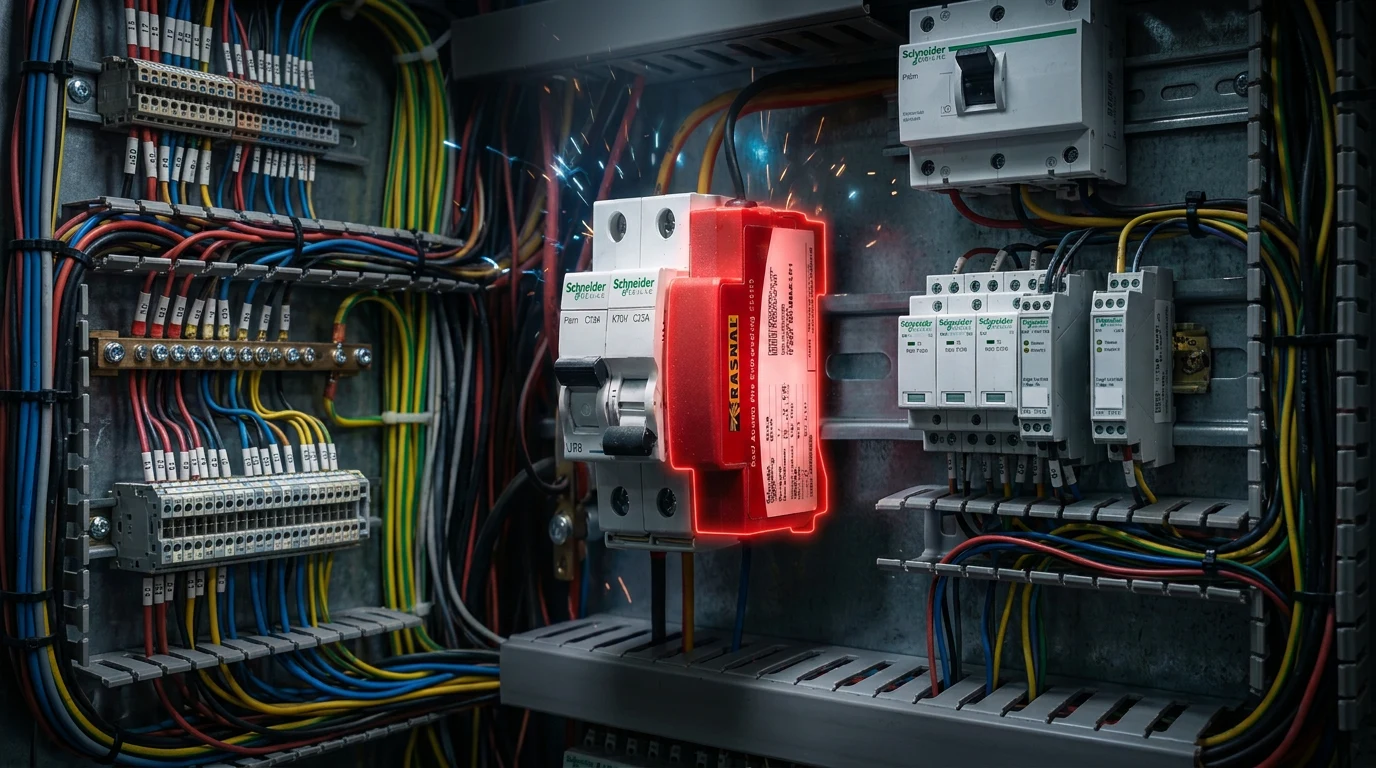
The Hidden Cause of Data Center Outages : Why You Need a Digital Grounding Device
June 12, 2026
You have replaced the hardware. You have called in the engineers. The problem keeps coming back.
Random server reboots. Network that drops for no reason. Hard drives failing ahead of schedule. Brand new switches behaving like they are three years old.
Your team runs tests. Nothing shows up. A week later, it happened again.
Here is what most IT managers miss: the problem is almost never the hardware itself. It is the grounding.
And until you fix the grounding, nothing else will stay fixed either.
First - What Is Grounding, and Why Does It Matter in a Data Center?
Think of electrical grounding as the safety drain for your entire facility.
Every piece of equipment in your server room servers, switches, UPS units, storage arrays generates small amounts of stray electrical energy as it runs. In a properly grounded facility, that energy flows safely into the earth. It goes nowhere near your data, your circuits, or your hardware.
In a poorly grounded facility, that energy has nowhere to go. So it builds up. It travels through your server chassis. It gets into your network cables. It interferes with your power supplies. And slowly, silently, it starts breaking things in ways that look exactly like hardware failure.
That is the trap. You keep replacing the hardware. The real problem is that your electrical grounding system never gets looked at.
Why This Problem Is Getting Worse, Not Better
Ten years ago, a standard server rack used about 3 to 5 kilowatts of power. Today, racks running AI workloads, GPU clusters, and high-density computing regularly pull 15 to 30 kilowatts sometimes more.
More power means more electrical noise. More heat. More stray current looking for somewhere to go.
The grounding infrastructure in most Indian data centers and server rooms was built for the older, lower-power world. Nobody upgraded it when the servers got more powerful. So the gap between what your grounding system can handle and what your equipment actually demands keeps growing and the symptoms keep getting worse.
This is not a small problem. It is one of the leading causes of unexplained data center downtime across India today.
What Bad Grounding Actually Does to Your Equipment
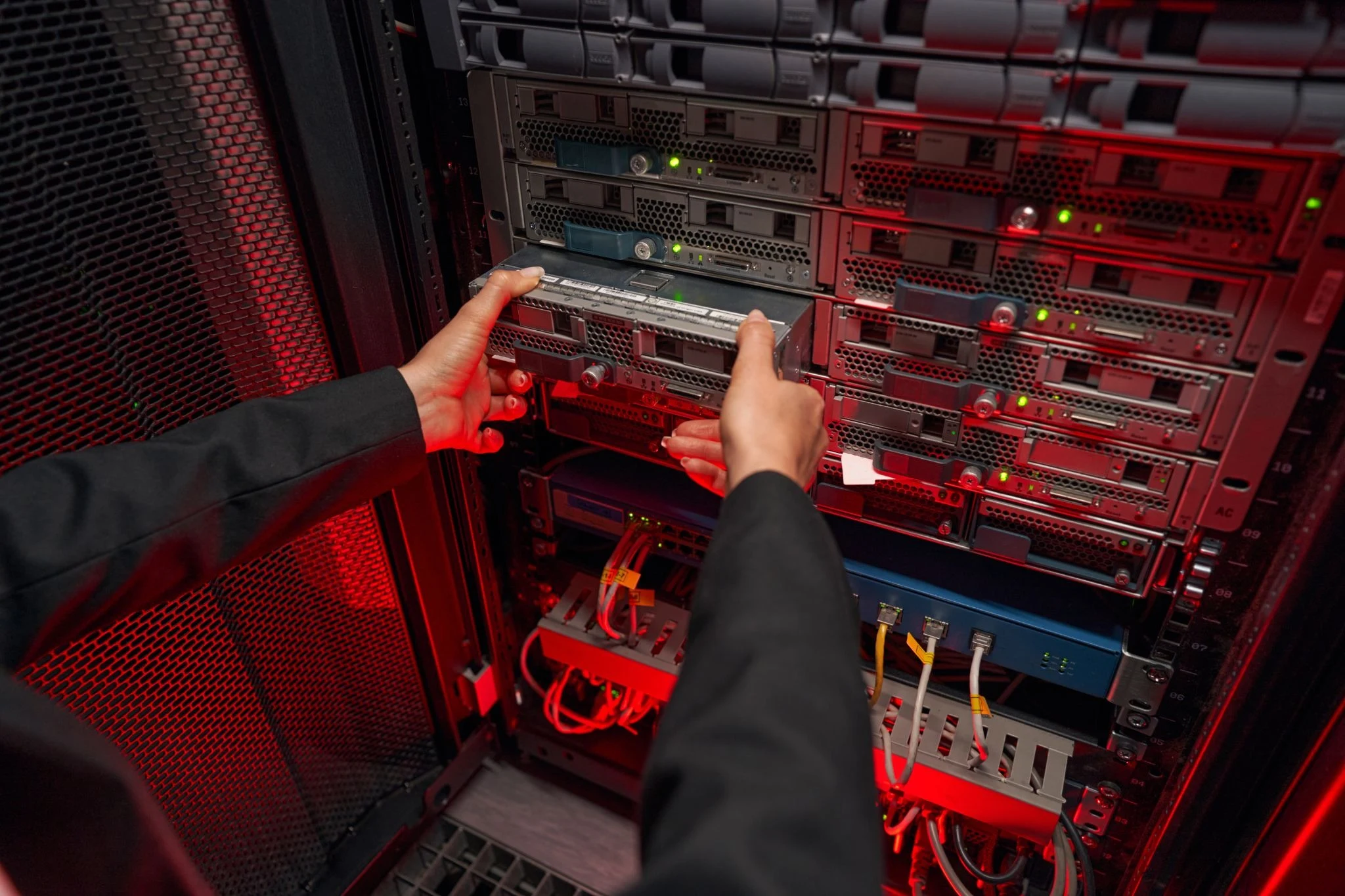
Here is exactly what happens inside your server room when grounding is inadequate:
Your servers reboot for no reason - When the electrical potential between two connected servers differs by even half a volt, some systems read it as a fault and restart themselves. Your logs show a hardware event. There is no hardware fault. It is a grounding problem.
Your network keeps dropping - Ethernet cables are very sensitive to electrical noise. When that noise travels through your ground plane and into your network cables, you get packet errors, dropped connections, and random latency spikes. It looks like a switch problem or an ISP problem. It is neither. It is a network downtime cause that starts in your building's electrical system.
Your power supplies die early - Stray voltage slowly degrades the capacitors inside your PSUs. Capacitor failure is the number one reason PSUs die before their rated lifespan. If you are replacing power supplies frequently, this is the most likely reason.
Your UPS keeps tripping - Modern UPS systems monitor the voltage between neutral and earth as part of their safety logic. When that voltage rises above a safe level — which happens with poor grounding — the UPS interprets it as a fault and shuts down or switches to bypass. You see it as a power event. The real cause is power quality issues in your grounding.
Your storage throws random errors - Hard drives and SSDs are not immune to ground noise either. When electrical interference couples into your storage cables, you get write failures, corrupted files, and RAID rebuilds that should never have been necessary.
All of these look like different problems. They all have the same problem: inadequate grounding.
How Do You Know If Grounding Is the Issue?
You do not need to guess. A grounding assessment will tell you clearly.
A proper assessment measures:
- Earth resistance — how effectively your facility's ground actually drains stray electrical energy into the earth. For sensitive electronic equipment, this should be below 1 ohm. Many facilities test at 5 to 10 ohms or higher.
- Neutral-to-earth voltage — the voltage difference between your neutral and earth conductors under real load conditions. Above 1 volt is a warning sign. Above 2 volts is a serious risk.
- Bonding continuity — whether every piece of equipment in your facility is properly connected to a common ground reference point, or whether some equipment is floating on its own isolated ground.
In our two decades of working with data centers, ISPs, hospitals, and industrial facilities across North India, these three numbers are out of spec in almost every facility that is experiencing unexplained outages.
The fix, once the assessment is done, is straightforward. But it requires the right equipment.
What a Digital Grounding Device Does - In Simple Terms
A standard earthing rod buried in the ground is a passive device. It sits there and waits. It has no ability to actively manage the electrical environment in your facility, handle fast-moving surge currents, or suppress the high-frequency noise that modern computing equipment generates.
A digital grounding device is active. It works continuously to do three things your passive earth rod cannot:
It neutralizes surge currents before they reach your equipment. When a lightning strike or a grid fault sends a surge through your electrical system, the device converts that surge energy into heat and dissipates it safely inside the device, not inside your servers.
It creates an equi-potential environment. This means every piece of grounded equipment in your facility shares the same electrical reference point. There is no voltage difference between your server chassis and your network switch chassis. No ground loops. No differential that causes the phantom reboots and NIC errors described above.
It keeps working as conditions change. As your load grows, as the season changes, as your grid voltage fluctuates a digital grounding device actively maintains protection. A passive earth rod degrades over time and offers no active management at all.
Rasnal's Digital Grounding Devices Built for Indian Conditions
Rasnal has been manufacturing and deploying digital grounding devices since 2003. Every product is made in India, designed for Indian grid conditions, and tested in some of the most demanding environments in the country including Army and Navy deployments in Siachen and Leh where temperature extremes and lightning exposure push equipment to its limits.
Here is a quick guide to which product fits which situation:
VKP-1-AC — Ideal for small to mid-sized server rooms, offices, and commercial buildings. Handles standard surge loads and provides clean equi-potential grounding for mixed IT and electrical equipment.
VKP-03-AC — Built for larger facilities with higher electrical load. Surge discharge capacity of 240 kA makes it suitable for facilities in high lightning-incidence areas or those with volatile grid supply.
VKP-01-PREMIUM — For facilities that need enhanced protection with a more robust build. Suited to critical infrastructure environments where downtime is not an option.
High Surge Digital Grounding Devices — For data centers, telecom towers, and industrial plants where surge exposure is extreme and standard protection is simply not enough.
Advanced Monitoring Model — For facility managers who want real-time visibility into their grounding health. Continuously monitors ground quality parameters and alerts your team to degradation before it causes a failure not after.
Every Rasnal VKP device works on the same core principle: it converts the harmful electrical energy of surges and transients into heat and arc energy inside the device, before that energy can reach your infrastructure. The result is an equi-potential, low-noise grounding environment that modern IT equipment needs to run reliably.
Who Needs This And Why Now
Data center and IT managers running high-density server environments where a single outage has serious financial and operational consequences.
Facility managers in hospitals and airports where mixed electrical loads medical equipment, HVAC, fire systems, and IT share the same building ground and the cost of a failure extends beyond money.
Telecom tower operators and ISPs whose base stations are exposed to lightning and grid surges year-round, and whose passive grounding degrades quietly over years of outdoor exposure.
EPC contractors and system integrators specifying electrical infrastructure for new builds or retrofits who want to include active grounding protection from day one rather than retrofitting it after the first major failure.
Manufacturing and industrial plant heads dealing with variable frequency drives and heavy motor loads that generate significant harmonic noise and whose control systems and IT infrastructure sit on the same ground plane.
If you operate any kind of critical electrical or IT infrastructure in India, the question is not whether you need a digital grounding device. The question is whether you find out you needed one before or after the next failure.
The Right Next Step
Do not order more replacement hardware before you have ruled out grounding.
Get a grounding assessment done. It is fast, non-disruptive, and in most cases it immediately reveals the root cause of outages that have been going on for months or years.
Rasnal's technical team has done this across data centers, telecom sites, hospitals, factories, and government installations across North India. We will assess your site, explain what we find in plain language, and recommend the right solution without overselling what you do not need.
One assessment. Potentially years of outages prevented.
Explore Categories
.webp)
Digital Grounding devices
Industrial & Network Solutions
Solar & Smart Energy
Fire Safety Systems
Surge Protection
CCTV & Security
Solar Energy