




.webp)

Aerosol vs CO₂ vs Sprinklers: Best for Electrical Panels?
June 19, 2026
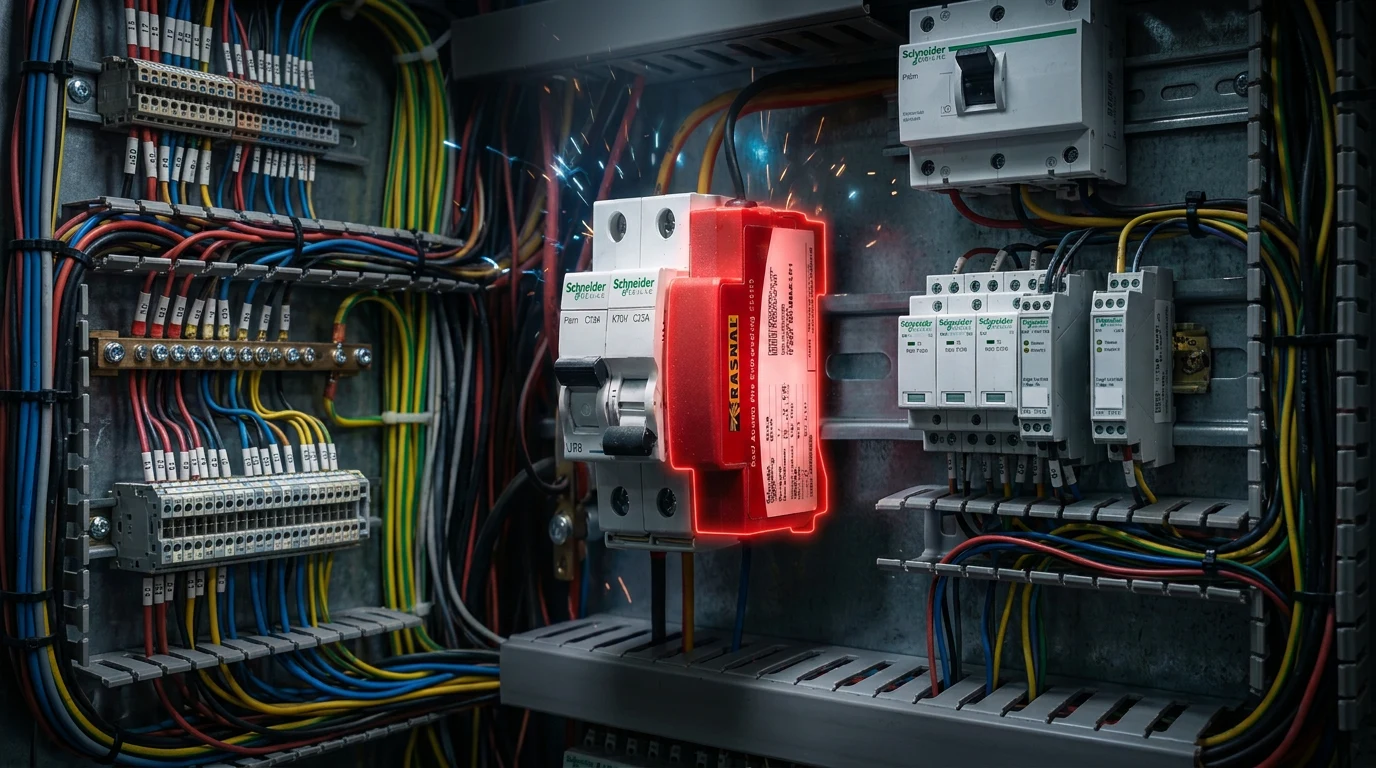
The Problem Nobody Talks About Until It's Too Late
Electrical panel fires are not rare. They are one of the most common causes of equipment loss and unplanned downtime in data centers, industrial plants, telecom sites, hospitals, and commercial buildings.
And yet, when most facility managers or project engineers are asked, "What suppression system do you have inside your switchgear room or distribution board?" the answer is almost always: "We have a sprinkler system in the building."
That is not the same thing.
A fire that starts inside a closed electrical cabinet behaves very differently from a room fire. It grows fast, in a sealed space, with no early warning, and by the time a room-level system activates, the damage is already done.
So if you are evaluating a fire suppression system for electrical panels, this guide will walk you through the three most discussed options aerosol, CO₂, and sprinklers and explain clearly which one is actually fit for purpose inside an enclosure.
What Makes Electrical Panel Fires Different
Before comparing systems, it helps to understand what you are dealing with.
Electrical fires inside panels and cabinets tend to:
- Start small, at a connection point, a faulty breaker, or an overloaded bus bar
- Build heat rapidly in a confined space with limited ventilation
- Go undetected for minutes before triggering any external alarm
- Involve live circuits, making water-based systems immediately dangerous
- Cause secondary damage (corrosion, short-circuits) even after the flame is out
This means your suppression system needs to activate early, work automatically without human intervention, be safe around live electronics, and leave no residue that causes further damage. Let's see how each option stacks up.
Option 1: Sprinkler Systems
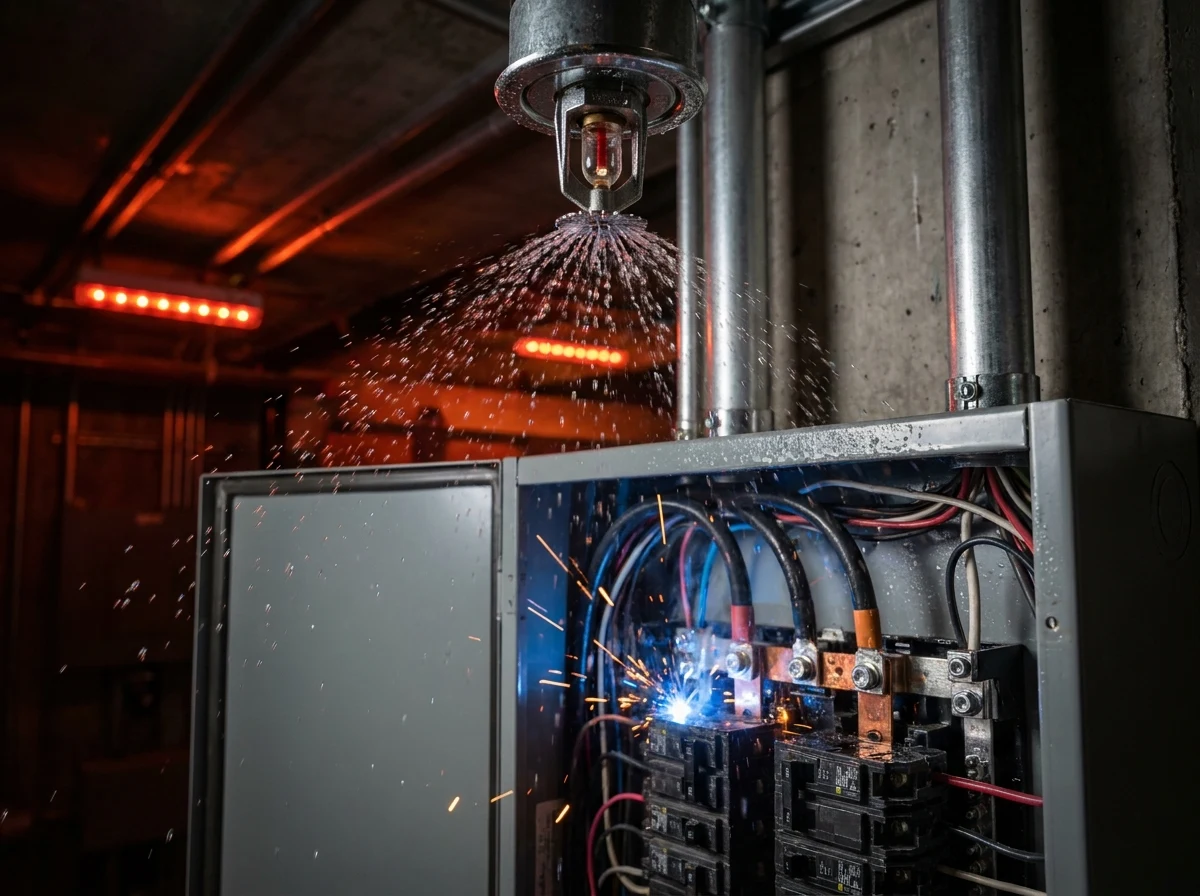
Sprinklers are the most common fire suppression system in buildings and the least appropriate solution for electrical enclosures.
How they work: A fusible element inside the sprinkler head melts at a threshold temperature, releasing water.
The problem inside electrical spaces:
Water and live electricity do not mix. The moment a sprinkler discharges over an energized panel, you have an electrocution risk, guaranteed short-circuits, and immediate water damage to every component inside whether or not they were on fire.
Beyond the safety issue, sprinklers are a room-level or zone-level solution. They are not designed to act inside a cabinet. By the time ambient temperatures rise enough to trigger a ceiling-mounted sprinkler head, a fire inside a sealed enclosure will have already caused severe damage.
Verdict for electrical panels: Not suitable. Sprinklers protect the room around the panel, not the panel itself.
Option 2: CO₂ Fire Suppression Systems
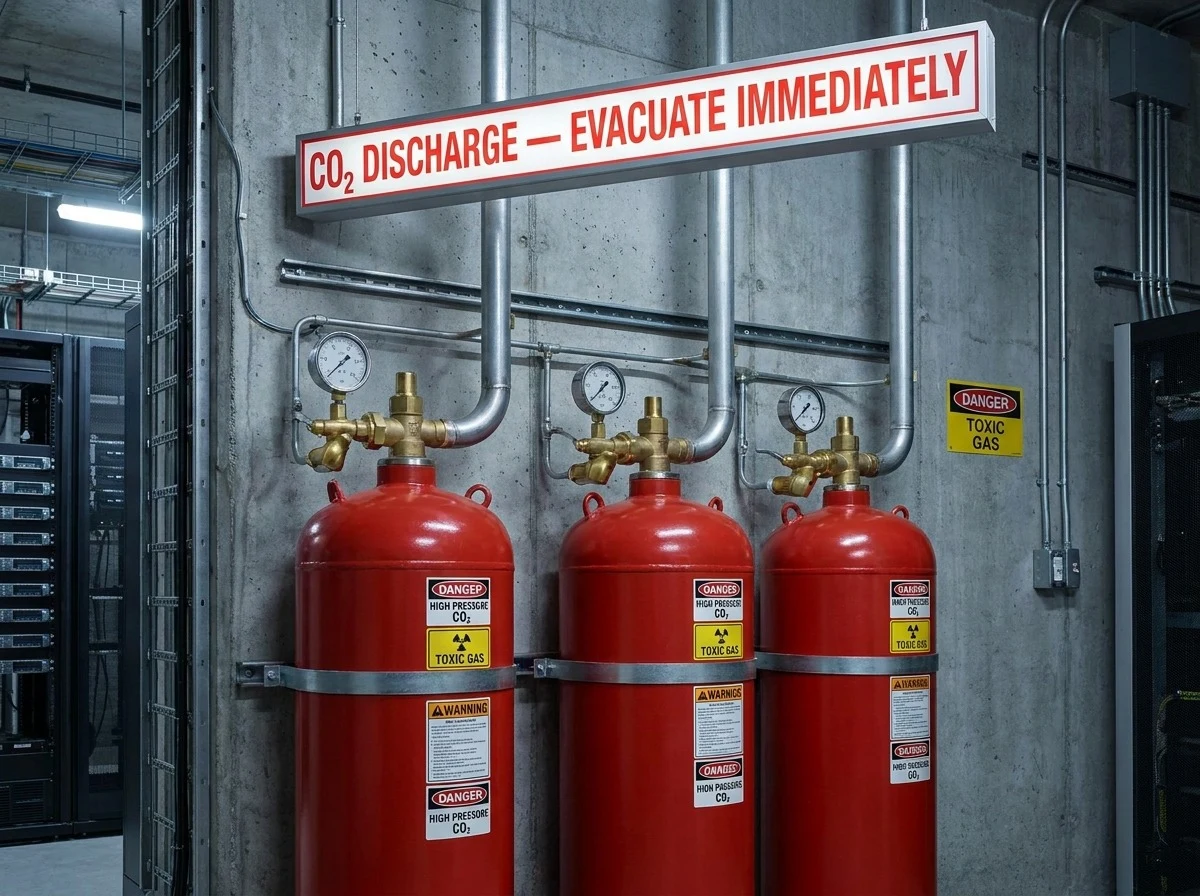
CO₂ (carbon dioxide) suppression works by displacing oxygen inside a sealed space, starving the fire of what it needs to burn.
How it works: CO₂ is stored in cylinders under pressure and released through nozzles into the protected area when triggered.
Where it works well: CO₂ is effective in large enclosed spaces server rooms, generator rooms, cable vaults where the space can be fully sealed and personnel can be evacuated.
The limitations for electrical enclosures:
CO₂ is a gas and requires a minimum concentration (typically 34–40%) to extinguish a fire. Achieving that concentration inside a small cabinet that is not perfectly sealed is difficult. Even a small gap in door seals or cable entries can let the gas escape before suppression is complete.
More critically: CO₂ is lethal to humans at suppression concentrations. This makes it unsuitable for any space that is regularly occupied, and it requires strict pre-discharge alarms, evacuation protocols, and lockout systems — all of which add cost and complexity.
CO₂ systems also require regular inspection, cylinder weight checks, and nozzle testing ongoing maintenance that many facilities underestimate.
Verdict for electrical panels: Suitable for large sealed rooms with proper evacuation protocols. Impractical and often unsafe for individual cabinets, distribution boards, or occupied spaces.
Option 3: Aerosol Fire Suppression Systems
This is where the conversation gets interesting for anyone protecting electrical enclosures.
Aerosol suppression works by releasing a fine cloud of potassium-based micro-particles that chemically interrupt the fire's combustion chain reaction. Unlike CO₂, it does not displace oxygen so it does not create a suffocation risk. Unlike water, it is non-conductive and leaves no liquid residue.
Key characteristics:
- Works on Class A (solid), Class B (liquid), and Class E (electrical) fires
- Does not require a perfectly sealed enclosure the aerosol cloud fills the space and stays effective even with minor gaps
- Non-toxic at use concentrations safe for occupied areas (though evacuation is still recommended good practice)
- Leaves a fine, dry residue that is easy to clean with a damp cloth and does not corrode circuit boards
- Electrically non-conductive safe around live panels
What makes aerosol specifically powerful for electrical enclosures is that modern automatic aerosol devices can be installed inside the cabinet itself, triggered by a heat-sensitive wire, and activate the moment local temperatures cross a threshold before the fire has any chance to grow.
No external signal needed. No manual intervention. No power supply required to trigger.
The Aerosol System Built for This Exact Problem
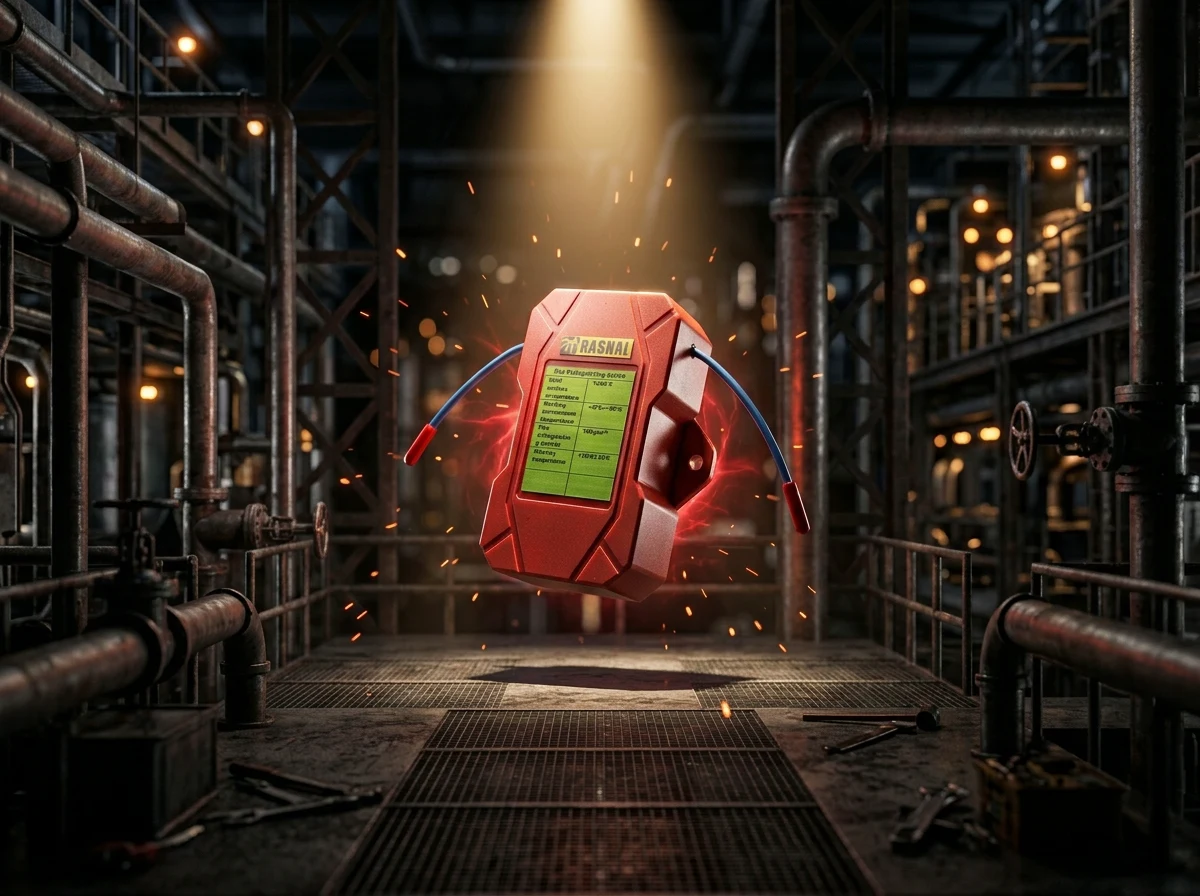
Rasnal's Heat Aerosol Fire Extinguishing Devices is one of the most practical implementations of automatic aerosol suppression available for electrical and industrial enclosures.
Here's what makes HAFED stand apart from generic suppression options:
Fully automatic activation. HAFED uses a heat-sensitive triggering wire that runs inside the cabinet. When it detects a temperature spike the earliest sign of a developing fire it activates instantly. No smoke detector needed. No external power supply. No manual operation.
Maintenance-free for 10 years.
Once installed, HAFED requires zero maintenance during its certified service life. There are no cylinders to refill, no nozzle checks, no annual inspections of the suppression mechanism itself.
No wiring required.
HAFED mounts inside the enclosure using industrial 3M adhesive. Installation takes minutes. There is no need to modify the cabinet's wiring or bring in an electrician to connect the suppression device.
Residue-free suppression.
The aerosol cloud leaves no conductive liquid, no corrosive agent, no powder that clogs circuit boards. The panel can often be cleaned and returned to service without replacement of components.
Certified to European standards.
Both HAFED variants (HAFED-28 for standard enclosures, HAFED-07 for compact spaces) are certified to EN 15276-1:2019 and EN 15276-2:2019 the benchmark European standards for aerosol fire suppression systems.
Wide operating range.
HAFED operates reliably from -50°C to +90°C suitable for outdoor telecom cabinets, rooftop panels, and industrial environments alike.
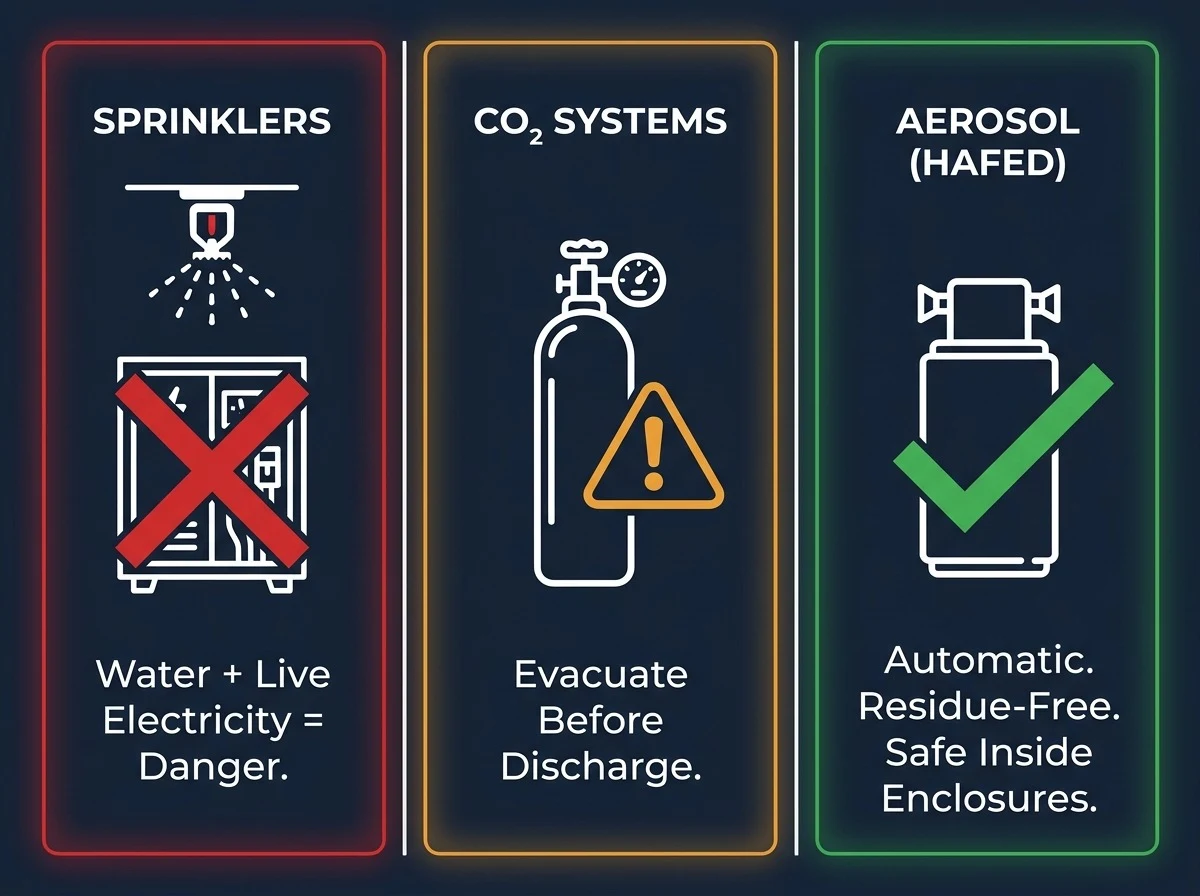
Side-by-Side Comparison
Where HAFED Is Used
The HAFED series is designed for any enclosed electrical or industrial space where a conventional suppression system cannot reach in time:
- Electrical panels and distribution boards — the primary use case
- Telecom, CCTV, and industrial control cabinets — protecting network and monitoring infrastructure
- EV chargers and lithium-ion battery packs — increasingly critical as EV adoption grows
- Energy storage units and inverter cabinets — solar and hybrid power installations
- MCB boxes and server enclosures — IT and data infrastructure
- Vehicle engine bays and small machinery — industrial and transport applications
If you are responsible for a data center, a telecom site, a manufacturing plant, a hospital, or any facility with electrical enclosures, the question is not whether to have a suppression system, it is whether your current system will actually reach the fire before it causes an outage or equipment loss.
Sprinklers protect rooms, not panels. CO₂ systems protect rooms and sealed spaces but come with human safety constraints. Aerosol suppression, specifically automatic aerosol devices like HAFED, is the only option that works inside the enclosure, activates automatically, requires no maintenance, and is safe around live electronics.
That is not a marketing claim. That is what the physics of electrical panel fires demands.
Frequently Asked Question
Q1. Can I use a normal fire extinguisher on an electrical panel fire?
You can use a CO₂ or dry powder extinguisher on an electrical fire in an emergency, but these are manual, require someone to be present, and are not suitable for fires that start inside a sealed panel where no one can see them until it is too late. An automatic suppression system installed inside the panel is far more effective because it activates the moment heat is detected, even at 3 a.m. with no one around.
Q2. Will an aerosol suppression system damage my electrical equipment?
No. Aerosol suppression releases micro-particles that chemically stop the fire they are electrically non-conductive and do not leave any liquid or corrosive residue on circuit boards. Most equipment inside the cabinet can be cleaned with a damp cloth and returned to service after a discharge. This is one of the main advantages over water-based or powder systems.
Q3. Does a fire suppression system inside an electrical panel need annual maintenance?
It depends on the system. CO₂ cylinder-based systems require annual checks and periodic refills. Sprinkler heads need inspection. However, HAFED aerosol devices are certified maintenance-free for up to 10 years you install it once and it is ready to protect for the full service life with no ongoing maintenance required.
Q4. Is an aerosol fire suppression system safe to use in an occupied room?
Yes, at the concentrations used for suppression inside an enclosure, aerosol is not toxic to humans unlike CO₂, which can cause suffocation at suppression concentrations. That said, standard safety practice recommends that personnel move clear of a discharging unit. Aerosol systems are considered a clean agent fire suppression alternative specifically because they do not require the same evacuation protocols that CO₂ demands.
Q5. What is the difference between a clean agent fire suppression system and an aerosol system?
Traditional clean agent systems (like FM-200 or Novec 1230) are gas-based and leave no residue, but they require pressurized cylinders, piping, and nozzle infrastructure, making them expensive and complex. Aerosol systems deliver similar residue-free, electronics-safe suppression but in a compact, self-contained device that installs directly inside the enclosure without any piping or external power making them far more practical and cost-effective for individual panels and cabinets.
Explore Categories
.webp)
Digital Grounding devices
Industrial & Network Solutions
Solar & Smart Energy
Fire Safety Systems
Surge Protection
CCTV & Security
Solar Energy